
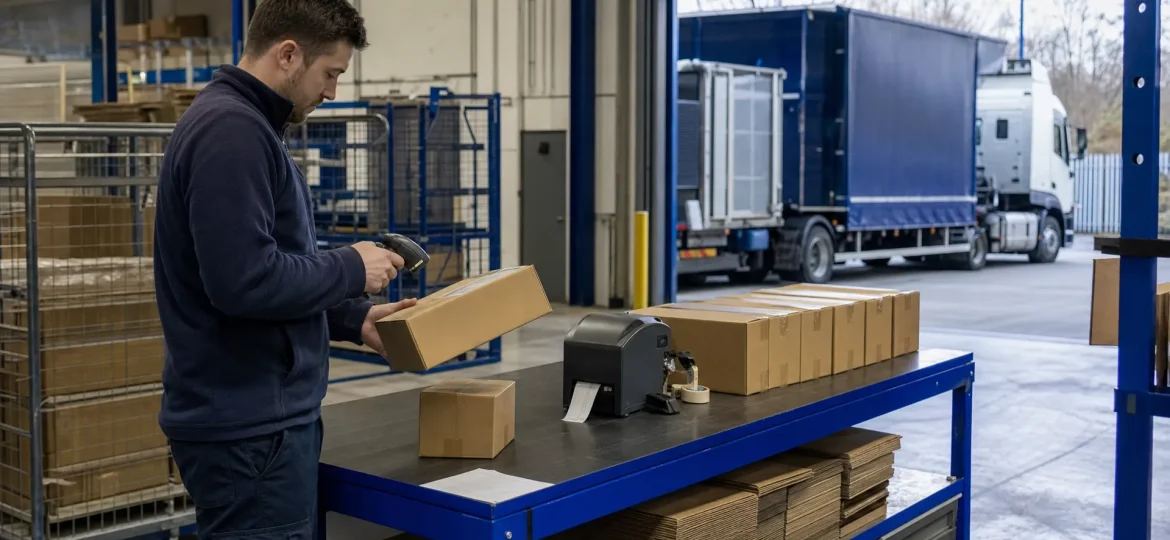
How to Stop Losing Money on Failed Deliveries
A failed delivery rarely looks expensive at first glance. One parcel comes back, one customer chases an update, one replacement order goes out. The problem is that these small incidents repeat quietly until they start eating into margin, tying up stock and putting pressure on your customer service team.
For eCommerce brands and product businesses, the goal is not to eliminate every failed delivery. Some customers will not be home. Some addresses will be incomplete. Some courier exceptions are outside your control. The real aim is to reduce avoidable failures, recover quickly when they happen and track the true cost so you can make better operational decisions.
This guide breaks down where failed delivery costs come from and what you can do to stop losing money before parcels leave the warehouse.
What counts as a failed delivery?
A failed delivery is any delivery attempt that does not result in the parcel reaching the customer as expected. That can include:
- The courier cannot access the property
- The customer is not available to receive a signed-for parcel
- The address is wrong, incomplete or unclear
- The parcel is damaged in transit and cannot be delivered
- The courier cannot scan the label or route the parcel correctly
- The order is returned to sender after missed attempts
- The delivery arrives too late for the customer's need
Some failed deliveries are obvious because the order comes back to your warehouse. Others are less visible because the parcel is eventually delivered after extra handling, extra customer contact and extra delay. Those still cost money.
For consumer orders, the seller is usually the customer's first point of contact when goods do not arrive. Citizens Advice explains that responsibility for resolving delivery problems normally sits with the retailer, not the courier from the customer's point of view. That means a failed delivery can quickly become a brand issue, even if the courier made the final mistake.
Where failed delivery costs really come from
The postage charge is only one part of the loss. The bigger cost often sits in admin, rework and customer retention.
| Cost area | What it can include | Why it matters |
|---|---|---|
| Carrier charges | Failed attempt fees, return charges, redelivery charges or upgraded replacement shipping | These costs can be hard to recover from the customer once the order has gone wrong |
| Warehouse labour | Receiving returned parcels, inspecting goods, repacking and relabelling | Your team spends time fixing old orders instead of dispatching new ones |
| Customer service | Emails, calls, refunds, complaints and tracking investigations | Support workload increases and response times can suffer |
| Stock availability | Returned stock held in limbo or replacement stock sent before the original returns | Inventory becomes less reliable, especially during busy periods |
| Reputation | Negative reviews, chargebacks or customers not reordering | Delivery experience strongly affects whether customers trust you again |
If you only measure courier invoice charges, you will underestimate the real impact. A more useful measure is the full failed delivery cost per incident, including reshipment, handling time and any refund or discount offered to the customer.
Start by tracking failed delivery reasons
You cannot fix failed deliveries properly if every issue is logged as "courier problem" or "customer not home". Those labels are too broad to be useful.
Instead, build a simple reason code list. It does not need to be complicated. The aim is to spot patterns quickly enough to act on them.
| Reason code | Likely root cause | First fix to test |
|---|---|---|
| Incorrect address | Customer input error, marketplace data issue or missing address validation | Add postcode lookup and review checkout address fields |
| No one available | Delivery service not suited to customer behaviour | Offer safe place, collection point or tracked delivery options where suitable |
| Label issue | Poor print quality, wrong label placement or damaged label | Tighten packing bench checks and label printer maintenance |
| Late dispatch | Warehouse cut-off missed or order processing delay | Review cut-off times, pick waves and courier collection times |
| Damaged parcel | Packaging not strong enough for product type or route | Improve packaging standards and test fragile items properly |
| Return to sender | Customer missed contact, delivery instructions unclear or no recovery process | Create a redelivery and customer contact workflow |
Review this data weekly at first. You are looking for clusters. If 40 parcels failed for 40 different reasons, you have a general process issue. If 40 parcels failed because addresses are incomplete, you have a specific fix.
Improve address quality before dispatch
A surprising number of failed deliveries begin before the order reaches the warehouse. If the customer enters a flat number in the wrong field or leaves out a company name for a workplace delivery, the courier may still accept the parcel, but the driver can struggle at the final stop.
For your own website, use postcode lookup or address validation at checkout. Make mobile number and email capture part of the process so the courier can send notifications where the service supports it. For marketplace orders, regularly review whether address fields are importing correctly into your fulfilment system.
You should also have rules for high-risk addresses. These include new build estates, student accommodation, business parks, hospitals, shared buildings and addresses with house names but no clear street number. Where possible, ask for delivery instructions before dispatch rather than after a failed attempt.
This is not about slowing down every order. It is about catching the small group of orders most likely to fail before they become expensive.
Keep dispatch promises realistic
A delivery can fail commercially even if the parcel eventually arrives. If the customer paid for next-day delivery and the order missed the dispatch cut-off, the outcome is still a service failure.
Dispatch performance depends on the whole fulfilment process. Orders need to import correctly, stock must be available, items must be picked accurately, packaging has to be ready and courier collections need to align with your promised cut-off. If one part slips, the delivery promise is already at risk.
If recurring late dispatches are part of the problem, it is worth reviewing the root causes in more detail. Gus Logistics has a separate guide on how to fix recurring late deliveries from your warehouse which covers cut-offs, order flow and warehouse bottlenecks.
For growing brands, outsourcing can also help when in-house teams are struggling to keep up with order peaks. A specialist order fulfilment service can connect sales channels, manage pick and pack activity and support more consistent dispatch routines.
Choose the right delivery service for the order
The cheapest delivery service is not always the lowest-cost option. If a low-cost service creates more failed attempts, more customer contacts and more reshipments, it can cost more than a better-matched service.
Match the service to the order profile. High-value items may need tracking and signature. Heavy or awkward goods may need a service designed for larger freight. Time-sensitive products may need a carrier option with stronger delivery visibility. Business addresses may work best during weekday delivery windows, while residential customers may value notifications and flexible delivery options.
You do not need to over-spec every parcel. The practical approach is to segment orders by risk. Low-value, simple parcels can use an economical service. Higher-risk orders should get the delivery method that gives them the best chance of arriving correctly first time.
For larger movements, urgent stock replenishment or delivery requirements outside standard parcel networks, using the right transport resource matters. Gus Logistics supports same-day and next-day transport with access to a range of vehicles for UK and Europe-wide distribution.
Reduce label and packaging failures
Courier networks rely on labels being machine-readable and parcels surviving multiple handling points. If your label is creased around a box edge, printed too faintly or placed on unstable packaging, the risk of delay or failure increases.
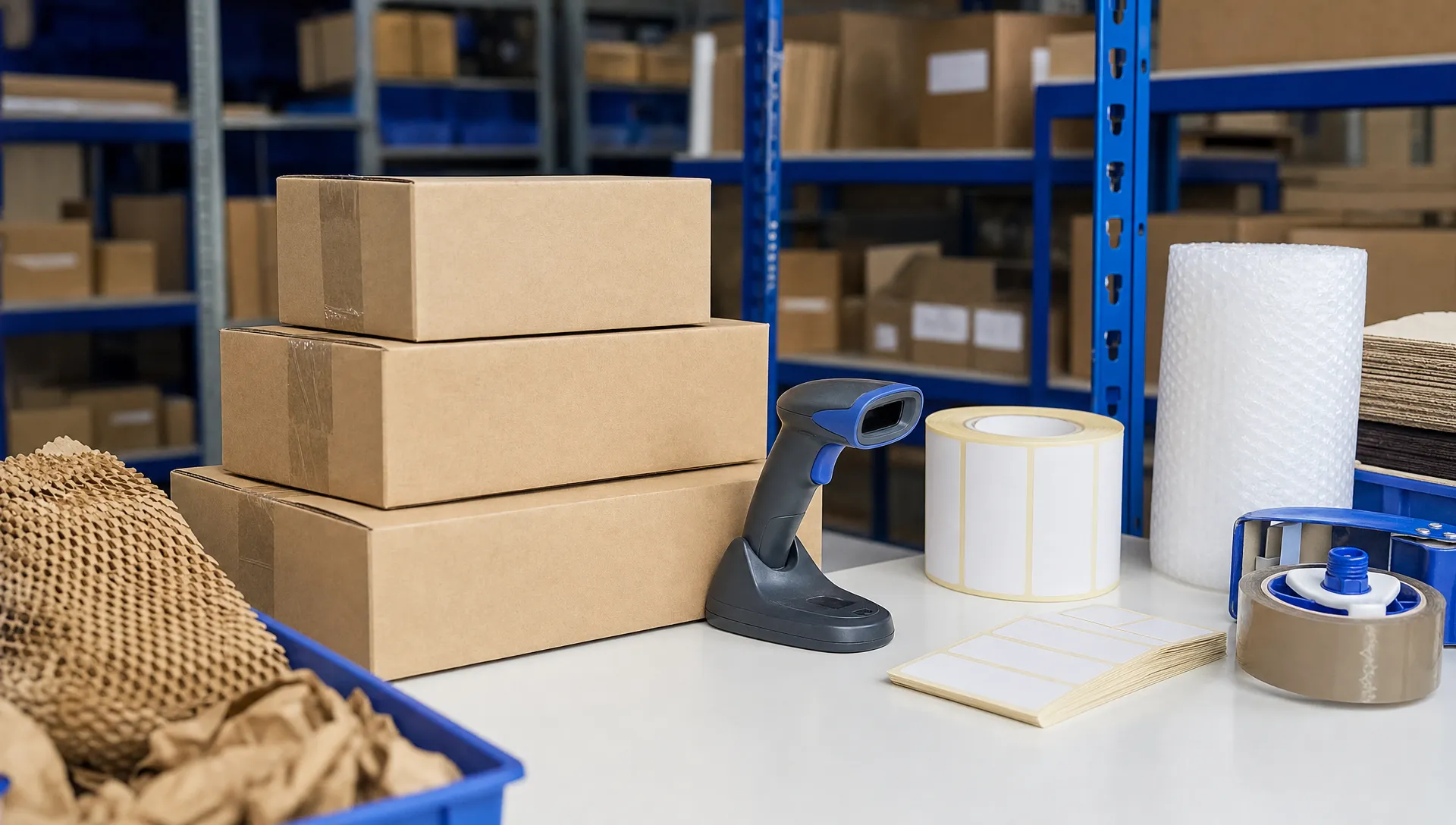
A good packing bench process should include a final label check before the parcel leaves the warehouse. Make sure the barcode is flat, clear and not covered by tape unless your label stock is designed for it. Keep label printers maintained and replace poor-quality rolls before they start creating scanning issues.
Packaging needs the same attention. Boxes should suit the size, weight and fragility of the item. Too much empty space can allow products to move and break. Weak cartons can crush. Over-packed parcels can split. If you see repeated damage-related delivery failures for the same SKU, treat it as a packaging specification issue, not a one-off courier accident.
If fulfilment errors are also contributing to delivery problems, such as wrong items being sent or incorrect quantities packed, this guide on reducing fulfilment errors and protecting customer reviews may help you tighten the process further.
Communicate before the customer has to chase
Customers are more forgiving when they know what is happening. Silence turns a simple delay into a complaint.
Your dispatch communication should make the delivery process clear. Confirm when the order has shipped, provide tracking where available and tell customers what to do if the address is wrong or they need to change delivery arrangements. If there is a deadline for changing an address before dispatch, make that clear too.
For higher-value or time-sensitive orders, proactive communication can prevent failed attempts. A simple message reminding the customer that a signature is required or that the courier will send delivery options can reduce missed deliveries.
Also make sure your customer service team has access to the right information. If they cannot see the order status, tracking details or dispatch time, they will spend longer investigating and the customer will wait longer for an answer.
Create a recovery process for failed deliveries
Even with better prevention, some deliveries will fail. The difference between a controlled cost and a margin drain is how quickly you recover.
A clear recovery process should answer four questions:
- Who contacts the customer when a delivery exception appears?
- How quickly do you verify the address or delivery issue?
- When do you authorise redelivery, refund or replacement?
- How is the reason code recorded so the issue can be prevented next time?
Avoid making every case a judgement call. If your team has to decide from scratch each time, costs become inconsistent and customers get different answers. Set rules for common scenarios, such as wrong address, missed delivery, damaged parcel or return to sender.
Returned goods also need a fast route back into stock where appropriate. If returns sit unprocessed for days, you may send replacements while usable stock is still waiting to be checked. That can create unnecessary stock pressure, especially for fast-moving SKUs.
Use warehouse visibility to prevent repeat issues
Failed deliveries often expose weak visibility. If you cannot see when an order was picked, packed, labelled, dispatched and returned, it is difficult to know where the problem started.
A warehouse management system can help by giving you a clearer record of stock movement and order status. For example, real-time inventory tracking makes it easier to avoid selling stock that is not ready to ship. Batch, serial number and best-before date tracking can also be important for sectors where the exact item sent matters.
If your delivery failures are linked to storage pressure, misplaced stock or poor inventory data, reviewing your warehousing setup may be the next step. Gus Logistics offers pallet and bulk storage with racked and floor storage, plus WMS tracking through a client portal.
A practical checklist to cut failed delivery costs
If you want to reduce failed delivery costs this month, start with the actions that are easiest to control. You do not need a full logistics rebuild to make progress.
Use this checklist as a starting point:
- Review the last 30 to 90 days of failed deliveries and group them by reason
- Add or improve address validation at checkout
- Check whether marketplace addresses are importing correctly
- Review delivery services by product value, size and customer type
- Audit label quality at the packing bench
- Test packaging for your most commonly damaged SKUs
- Make dispatch cut-offs clear on product pages and checkout
- Give customer service access to tracking and dispatch information
- Create standard rules for redelivery, refund and replacement decisions
- Track the full cost of each failed delivery, not just the carrier charge
Once you have the basics in place, keep reviewing the data. Failed delivery reduction is rarely one big fix. It is usually a series of small improvements that remove avoidable friction from the order journey.
When to consider outsourcing fulfilment and delivery support
If failed deliveries are increasing because your team is stretched, your storage space is under pressure or your systems are too manual, it may be time to look at external logistics support.
The right 3PL should help you reduce avoidable failures by improving order accuracy, dispatch consistency, stock visibility and delivery coordination. You should also be able to speak to people who understand your operation, not just log tickets through a call centre.
Gus Logistics is a family-run 3PL provider based in Nantwich, Cheshire, supporting eCommerce brands, manufacturers and product businesses across the UK. Services include order fulfilment and pick and pack, pallet and bulk warehousing, same-day and next-day transport, co-packing, returns management and FSDU support.
For eCommerce fulfilment, Gus Logistics integrates with 60+ platforms including Shopify, Amazon, eBay, WooCommerce and Magento. Late cut-offs up to 10pm and next-day dispatch are available, depending on your operation and agreed service setup. There are no minimum volume requirements, which can make outsourcing more accessible for growing SMEs that need better control without committing to unrealistic volumes.
Frequently Asked Questions
What is the biggest cause of failed deliveries? There is no single cause for every business. Common issues include incorrect addresses, missed delivery attempts, late dispatch, poor packaging, damaged labels and delivery services that do not suit the order type. The best first step is to track reason codes so you can see which problem is costing you most.
How do failed deliveries affect profit? Failed deliveries reduce profit through extra courier charges, replacement shipping, warehouse labour, customer service time, refunds, discounts and lost repeat orders. The true cost is usually higher than the visible postage charge.
Can better fulfilment reduce failed delivery costs? Yes, especially when failures are linked to late dispatch, picking errors, poor labelling, weak packaging or poor stock visibility. A stronger fulfilment process helps orders leave the warehouse correctly, on time and with the right delivery service.
Should every order use a premium delivery service? Not necessarily. A better approach is to match the service to the risk. Low-value, simple parcels may not need a premium option, but high-value, fragile, urgent or awkward orders often justify a more controlled delivery service.
When should a business outsource logistics? Outsourcing is worth considering when failed deliveries are becoming frequent, your team is spending too much time on rework, storage is limiting growth or manual processes are affecting dispatch accuracy. A 3PL can provide systems, space and operational support without requiring you to build everything in-house.
Get failed delivery costs under control
Failed deliveries are not just a courier problem. They are usually the result of small weaknesses across checkout, stock control, fulfilment, packaging, dispatch and communication. Fixing them protects margin and gives customers a better reason to order again.
If you want a practical conversation about reducing failed deliveries and improving your logistics setup, call Gus Logistics on 01270 335014 or get in touch via the contact page.
Looking for a Logistics Partner You Can Trust?
From warehousing and order fulfilment to transport and FSDU design - Gus Logistics handles it all from our base in Nantwich, Cheshire. Over 10 years experience, no minimum volumes, no long contracts.
