

How to Choose the Right Courier Mix for Your Delivery Promise
Your courier mix delivery promise is the difference between a checkout promise customers trust and a dispatch process that creates avoidable complaints. If you offer next-day delivery, economy shipping, pallet delivery or same-day options without a clear plan for when each service should be used, costs rise quickly and customer expectations become harder to manage.
The right courier mix is not simply the cheapest carrier list. It is a practical set of delivery services matched to your products, order profile, warehouse cut-offs, customer expectations and margins. For many growing eCommerce and product businesses, that means using more than one carrier or delivery method, but not so many that the operation becomes difficult to control.
Build Your Courier Mix Delivery Promise Around Real Customer Needs
A delivery promise should start with what customers genuinely need, not with every service a courier can sell you. Some customers want the lowest price. Others will pay for speed, tracking or a named delivery day. Trade buyers may care more about reliable pallet delivery than a consumer-style parcel service.
A practical courier mix usually covers a small number of clearly defined promises:
| Delivery promise | Best suited to | Watch out for |
|---|---|---|
| Economy delivery | Low-margin products and non-urgent orders | Longer transit times can increase support queries |
| Tracked standard delivery | Most everyday eCommerce orders | Tracking quality varies by carrier and service |
| Next-day delivery | Time-sensitive customer orders | Warehouse cut-off times must support the promise |
| Timed or premium delivery | Higher-value goods and B2B deliveries | Higher cost needs to be built into pricing |
| Same-day or dedicated delivery | Urgent stock moves, pallet deliveries and retail deadlines | Requires fast booking and accurate delivery details |
The aim is not to offer every option at checkout. It is to offer the options your customers value and your operation can consistently deliver.
Start With the Promise, Then Work Backwards
A stronger courier mix delivery promise starts by defining what the customer sees before you look at courier rate cards. If your website says “order by 4pm for next-day delivery”, the courier is only one part of that promise. Stock needs to be available, the order needs to reach the warehouse, the item must be picked and packed accurately, the label must be correct and the goods must be handed over before the carrier cut-off.
That means you should map each promise from checkout to delivery. For example, a next-day promise may be realistic for small parcel orders received before a certain time, but not for bulky items, personalised products or mixed-SKU orders that need extra checking.
If your current issue is delivery speed rather than carrier selection alone, it is worth reviewing how logistics transportation affects delivery speed across the full process, including warehouse location, transport planning and order readiness.
Segment Orders Before Choosing Couriers
The best courier mix delivery promise is built around order types, not averages. If you only look at total parcel volume, you may miss important differences between light parcels, oversized items, fragile goods, pallets and high-value shipments.
Start by splitting orders into useful groups. These do not need to be complicated, but they should reflect how orders behave in real life:
- Small parcels that can travel through standard parcel networks
- Oversized or fragile items that need better handling or stronger packaging
- Palletised goods for trade customers, retailers or bulk orders
- High-value goods where proof of delivery and tracking matter more
- Urgent orders where the risk of missing the deadline outweighs the extra transport cost
This segmentation helps you avoid using premium delivery where it adds no value. It also stops you putting awkward freight through a service that was designed for small parcels.
If you store stock with a third-party logistics partner, the warehouse set-up matters too. Good warehouse storage and stock visibility make it easier to know what can be promised, what needs replenishing and which products need special handling before dispatch.
Match Delivery Options to Fulfilment Capability
Your courier mix delivery promise will only work if your fulfilment process can keep pace with it. A courier may offer a next-day service, but that does not help if orders are released late, stock records are wrong or packing takes longer than expected.
For eCommerce brands, the key operational checks are simple. Can orders flow automatically from the sales channel to the warehouse? Are SKUs clear and scannable? Are packing rules defined? Are courier labels generated without manual re-keying? Are cut-off times realistic for the team handling the goods?
This is where fulfilment and delivery should be planned together. A business using Shopify, Amazon, eBay, WooCommerce or Magento needs order data to move quickly and accurately into the dispatch process. Gus Logistics supports order fulfilment and pick and pack services with integrations across 60+ platforms, late cut-offs up to 10pm and next-day dispatch where the service and order profile allow it.
The practical point is this: do not sell a delivery promise that your warehouse cannot repeat on a busy Monday, after a promotion or during seasonal peaks.
Know When to Use Dedicated Transport
Parcel networks are useful, but they are not the answer to every delivery problem. Some orders need a dedicated vehicle, especially when timing, value, size or handling requirements make standard courier services unsuitable.
A courier mix delivery promise should include a clear rule for when to move away from parcel delivery and into same-day, next-day dedicated or pallet transport. This often applies to urgent replenishment, retail display deliveries, time-critical B2B orders, trade counter stock, event stock or freight that needs a direct route rather than a hub-based network.
Dedicated transport usually costs more than a parcel label, but it can protect the bigger commercial outcome. If a late delivery means a retailer misses a launch date or an engineer cannot complete a job, the cheapest delivery option is unlikely to be the best one.
Gus Logistics provides same-day and next-day transport services using its own fleet as well as access to vehicles across the UK and Europe. That gives businesses more flexibility when parcel delivery is not the right fit.
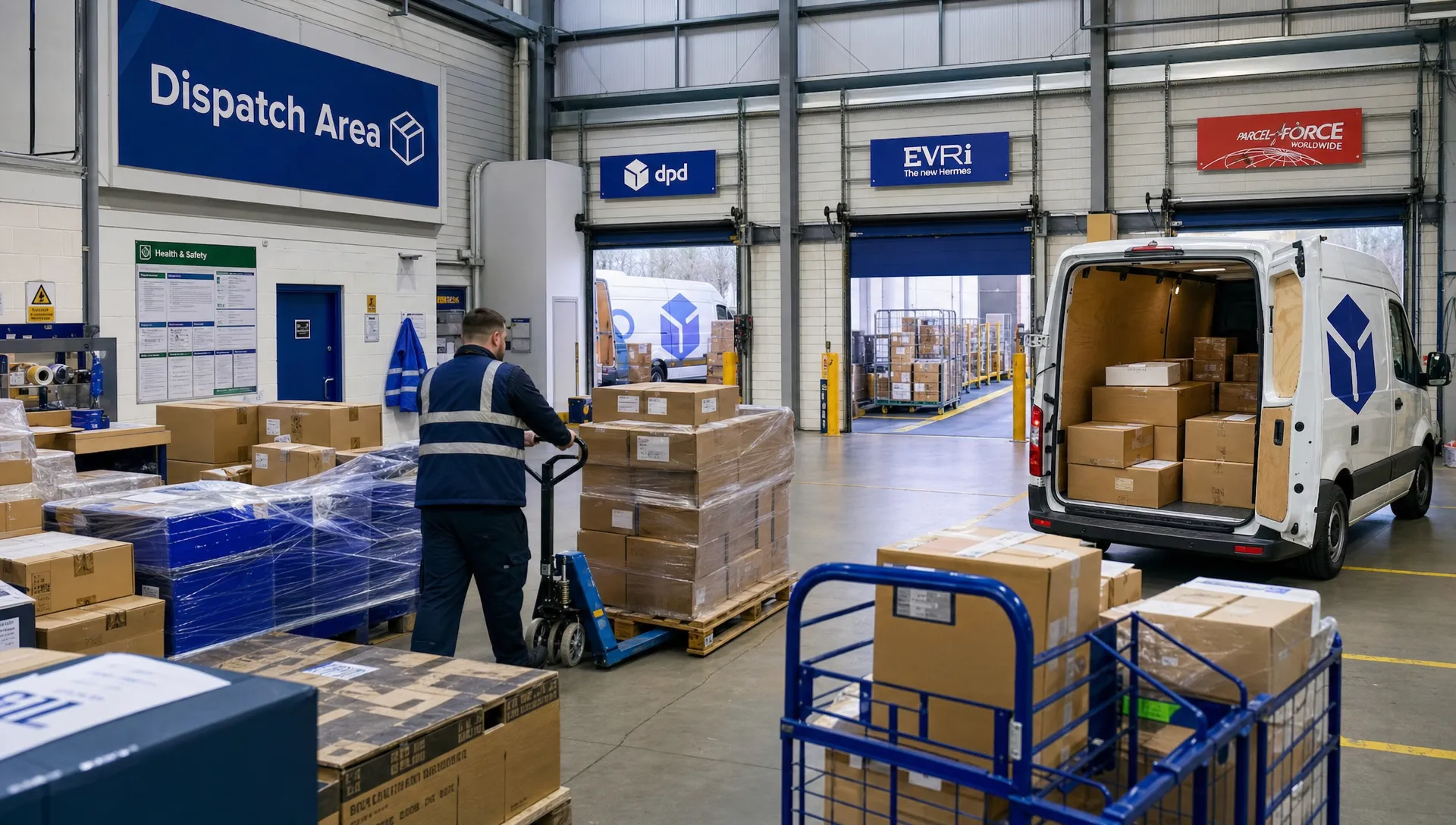
Make the Promise Visible to Customers and Staff
Once your courier mix delivery promise is defined, it needs to be visible in the places where decisions are made. That includes your website, checkout, customer service scripts, warehouse rules and carrier selection logic.
Customers should understand the difference between dispatch time and delivery time. “Next-day delivery” can create confusion if the customer orders after the cut-off and expects the parcel tomorrow. Plain wording such as “order before 4pm for dispatch today” is often clearer than vague speed claims.
Your internal team also needs the same clarity. If a customer pays for a premium service, the warehouse should be able to identify that order quickly. If a postcode requires a longer delivery window, customer service should know before a complaint comes in. If a pallet order needs a booking slot, that process should be triggered early enough to avoid a missed delivery.
Good tracking matters here, but it is not a substitute for good promises. Tracking tells the customer what is happening. A well-designed promise reduces the chance of disappointment in the first place.
Use a Simple Scoring Framework
A practical courier mix delivery promise can be tested with a simple scoring framework. You do not need complex modelling to make better decisions. You need to compare delivery options against the things that matter to your business and customers.
Use a table like this when reviewing carriers or service types:
| Factor | Question to ask | Why it matters |
|---|---|---|
| Reliability | Does this service meet the promised timeframe consistently for our order type? | Protects customer trust and reviews |
| Cost | Is the delivery cost proportionate to margin and customer value? | Stops shipping from eroding profit |
| Coverage | Does it work for our key UK regions and postcodes? | Avoids hidden service gaps |
| Tracking | Can customers and staff see useful delivery updates? | Reduces support queries |
| Handling | Is the service suitable for product size, weight and fragility? | Reduces damage and failed delivery risk |
| Operational fit | Does it match warehouse cut-offs and packing processes? | Makes the promise repeatable |
Do not choose a courier only because it scores well in one area. A low-cost service that causes failed deliveries, damage or slow support can become expensive once you include replacements, refunds and staff time.
Review Performance Before Adding More Options
Review your courier mix delivery promise before you add another carrier or checkout option. More choice can help, but it can also create confusion, extra admin and inconsistent customer communication.
Useful signs that your courier mix needs attention include rising late-delivery complaints, frequent manual carrier changes, too many urgent upgrades, unclear cut-off times or regular problems with specific product types. You may also see pressure from trade customers who need pallet delivery or fixed delivery days that your current parcel-focused model cannot support.
A monthly review is often enough for stable operations. During peak periods, new product launches or retail campaigns, review more frequently. Look at failed deliveries, delivery complaints, carrier claims, premium service usage and orders upgraded at your cost.
If customers are already complaining about lateness, carrier choice may only be part of the issue. You may need to tighten stock accuracy, pick and pack speed, dispatch cut-offs and communication as well.
How Gus Logistics Supports a Reliable Delivery Promise
For SMEs, the challenge is often not knowing which courier exists. It is building a delivery set-up that joins storage, fulfilment and transport into one workable process. That is where a logistics partner can help.
Gus Logistics is a family-run 3PL provider based in Nantwich, Cheshire, supporting eCommerce brands, manufacturers and product businesses across the UK. The team provides order fulfilment, pallet and bulk warehousing, same-day and next-day transport, co-packing, returns management and FSDU services.
Because Gus Logistics works across fulfilment, storage and transport, it can help businesses match the promise made to customers with the practical handling needed behind the scenes. That might mean next-day parcel dispatch for online orders, pallet storage with real-time WMS tracking, dedicated transport for urgent freight or a more controlled process for retail-ready stock.
There are no minimum volume requirements, which is useful for growing businesses that need professional logistics support without being forced into a model designed only for very high-volume shippers.
Frequently Asked Questions
What is a courier mix? A courier mix is the combination of delivery services a business uses to ship orders. It may include standard parcel delivery, tracked services, next-day options, pallet delivery, same-day transport and dedicated vehicles depending on the products and customer promise.
How many couriers should an eCommerce business use? There is no single right number. Many businesses benefit from having a primary parcel service, a backup option and a separate plan for pallets or urgent freight. Too many services can create admin problems, so the mix should stay manageable.
Should I offer next-day delivery to every customer? Not always. Next-day delivery only works if stock, picking, packing, labelling and carrier collection times all support it. It may be better to offer next-day delivery only for eligible products, postcodes and order cut-off times.
How often should I review my courier mix delivery promise? Review it whenever complaints, costs or operational pressure increase. For stable operations, a regular monthly review can be enough. During peak trading, promotions or retail launches, review performance more often.
Can a 3PL help choose the right courier mix? Yes, a 3PL can help by looking at order profiles, storage needs, dispatch cut-offs, product handling, delivery destinations and customer expectations. The best advice comes from understanding the whole process, not only the final courier leg.
Need Help Choosing the Right Delivery Set-Up?
If your delivery promise is becoming harder to keep, the answer may not be a single new courier. You may need a better mix of fulfilment, storage and transport options that matches how your business actually ships orders.
Gus Logistics can help you build a practical delivery process for parcels, pallets, urgent freight and growing eCommerce volumes. To discuss your requirements, call 01270 335014 or get in touch via the contact page.
Looking for a Logistics Partner You Can Trust?
From warehousing and order fulfilment to transport and FSDU design - Gus Logistics handles it all from our base in Nantwich, Cheshire. Over 10 years experience, no minimum volumes, no long contracts.
