
What Is Serial Number Tracking in Warehousing and Fulfilment?
If you sell products where one individual item needs to be identified after it leaves the warehouse, serial number tracking is the process that makes that possible. It links a unique number to a single physical unit, so you can see which item was received, stored, picked, dispatched and, if needed, returned.
For many businesses, SKU-level stock control is enough. If you sell low-cost consumables or simple products with no warranty requirement, you may not need to know exactly which unit went to which customer. But for electronics, tools, appliances, medical devices, premium goods or products with warranty claims, item-level traceability can prevent expensive problems later.
What serial number tracking means in practice
A serial number is a unique identifier attached to one unit of stock. Two products may share the same SKU because they are the same model, size or colour, but they should not share the same serial number if each unit needs to be traced separately.
The easiest way to understand the difference is to compare the three common levels of stock control:
| Tracking method | What it identifies | Common use |
|---|---|---|
| SKU tracking | A product type or variation | A black phone case, size large workwear, 500ml bottle |
| Batch tracking | A group made, received or supplied together | Food, cosmetics, chemicals, health products |
| Serial tracking | One individual unit | Electronics, tools, appliances, machinery, high-value items |
Used well, serial number tracking creates a clear chain of custody for each unit, from goods-in to final dispatch. That chain is what helps teams answer practical questions quickly, such as which customer received a specific item, whether a returned product is the same one originally sent or which units may be affected by a supplier issue.
If you also handle batch-controlled products, it is worth understanding how batch tracking is different from serial-level control. Some businesses need both, especially when products carry warranties, expiry dates or quality control requirements.
How it works inside a warehouse
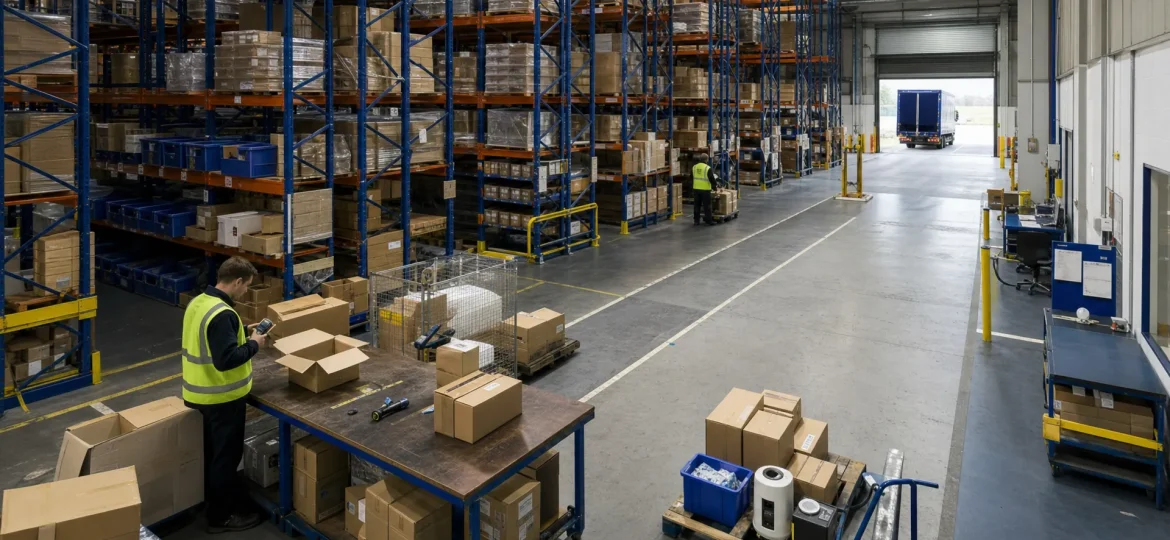
In practice, serial number tracking relies on three things working together: clear product labelling, reliable scanning processes and a warehouse system that can store the data against the right order, stock location and customer.
At goods-in, stock arrives at the warehouse and is checked against the expected delivery. The warehouse team may scan the manufacturer’s barcode, record the serial number manually or apply a warehouse label if the original packaging is not suitable for scanning. The chosen process depends on the product, packaging and volume.
Once recorded, the serial number is linked to the SKU and the warehouse location. In a good warehouse setup, the team should know not only how many units are in stock, but where those units are and which individual serial numbers are available for sale.
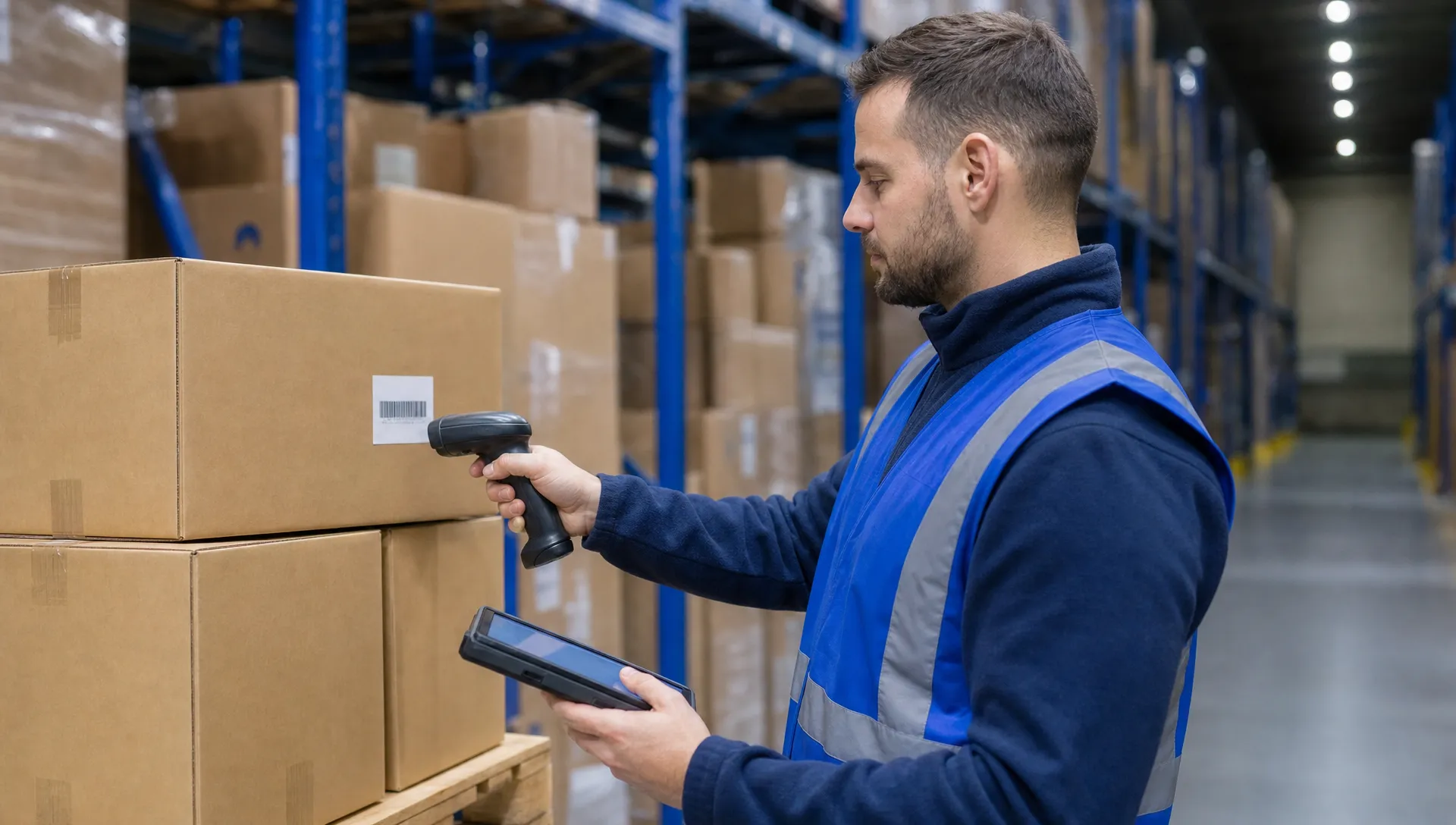
When an order is picked, the operative scans or records the specific serial number being sent. The fulfilment system then links that unit to the customer order before dispatch. If the customer later contacts the business about a warranty issue, replacement request or technical fault, the business can see exactly which unit was supplied.
This is where a modern WMS becomes valuable. If you are reviewing your stock systems, this guide to what a warehouse management system does explains how warehouse software supports stock movement, locations and visibility.
Where serial numbers matter during fulfilment
Serial control can happen at different points in the fulfilment process. For some businesses, serials are captured when goods arrive. For others, the most important moment is dispatch, because that is when the specific unit becomes linked to a customer order.
For eCommerce brands, this is especially useful when selling through multiple channels. If the same stock feeds Shopify, Amazon, eBay or other platforms, your warehouse process needs to make sure each outgoing order receives the correct item record. A simple stock count will not show that level of detail.
This is one reason to choose an outsourced partner that can support both storage and dispatch controls. Gus Logistics provides order fulfilment and pick and pack services for growing businesses, with integrations across 60+ platforms including Shopify, Amazon, eBay, WooCommerce and Magento.
Returns are another important point. If a customer sends an item back, the warehouse can check the returned serial number against the one originally dispatched. That helps identify mistaken returns, warranty swaps and cases where the wrong unit has been sent back.
Which businesses actually need it?
Not every product business needs serial number tracking. Adding extra scan points and data checks can slow an operation down if the control is not needed. The question is whether the value of item-level traceability outweighs the extra handling time.
It is usually worth considering if you sell products with one or more of these characteristics:
- High unit value, such as electronics, specialist tools or machinery
- Manufacturer warranties or extended service plans
- Safety, compliance or product recall requirements
- Products that are rented, leased, repaired or refurbished
- Items that are attractive for returns fraud or substitution
- Technical goods where customer support may need a specific unit history
For low-value, fast-moving products with no warranty and low recall risk, SKU or batch-level control may be enough. For a laptop, power tool, medical device component or premium appliance, knowing the exact unit shipped to the customer can save a lot of time later.
Business benefits beyond stock control
The main benefit of serial number tracking is traceability, but the commercial value often shows up in day-to-day customer service, returns management and supplier conversations.
If a customer reports a fault, your team can confirm whether the product is still under warranty and whether it was the same unit your business supplied. If a supplier flags a fault with a specific production run or serial range, you can identify affected units more precisely. If a retailer asks for proof of what was supplied, you have a stronger record than a dispatch note alone.
Serial-level records can also support better stock accuracy. Instead of seeing only that 40 units are available, your operation can identify the actual units in storage. That helps when stock is split across pick faces, pallet locations or different sales channels.
For brands that process returns, the benefit is often immediate. A return can be checked against the outbound order before it is restocked, repaired or rejected. That reduces the risk of placing the wrong item back into saleable stock.
Common mistakes to avoid
A common mistake is treating serial number tracking as an admin task rather than an operational process. If the warehouse team records serial numbers in a spreadsheet after dispatch, the data may be late, incomplete or disconnected from the actual order.
Another issue is inconsistent labelling. If some suppliers place serial numbers on outer cartons, some on the product itself and others on paperwork, the warehouse needs a clear rule for what gets scanned and when. Otherwise, accuracy depends too much on individual judgement.
Businesses also run into problems when they only think about outbound orders. Returns need the same attention. If your team cannot verify the serial number of a returned item, you may accidentally refund the wrong unit, restock a substituted product or lose sight of repair history.
Finally, do not capture more data than you will use. Serial control works best when it solves a clear business problem, such as warranty handling, recall response, return verification or asset visibility.
How to introduce serial number tracking with a 3PL
If you are outsourcing warehousing or fulfilment, ask early whether the 3PL can support serial number tracking within its normal warehouse processes. It is much easier to build the requirement into the setup than to retrofit it after stock has already arrived.
Useful questions include:
- Can serial numbers be recorded at goods-in, dispatch or both?
- Can the WMS link a serial number to a specific customer order?
- Can the team scan barcodes rather than typing numbers manually?
- Can serial records be viewed or exported when needed?
- How are returns checked against the original outbound item?
- What happens if a serial number is missing, damaged or duplicated?
You should also agree which products need serial control. It may not be necessary across your whole range. Many businesses only apply it to higher-value SKUs, regulated lines or products with warranty exposure.
For stock that needs careful handling before dispatch, Gus Logistics offers pallet and bulk warehousing with racked and floor storage, real-time WMS tracking via a client portal and options for batch, serial number and best-before date tracking.
How Gus Logistics can support item-level traceability
Gus Logistics is a family-run 3PL provider based in Nantwich, Cheshire, supporting eCommerce brands, manufacturers and product businesses across the UK. For businesses that need more than basic storage, the team can help connect warehousing, order fulfilment, returns and transport into one joined-up process.
Where serial number control is required, Gus Logistics can support item-level traceability through its warehouse systems and operational processes. That can be useful for businesses managing warranties, high-value goods, product returns or stock that needs tighter visibility before dispatch.
The wider service is designed for growing businesses that need practical logistics support without call centres or rigid minimum volume requirements. Clients speak directly to the people handling their freight and stock, with quotes usually turned around the same working day.
Because Gus Logistics is located near the M6, M56 and M62, it is well placed for UK-wide distribution from its Cheshire base. Businesses can combine storage, fulfilment and transport support as their requirements change.
Frequently Asked Questions
Is serial number tracking the same as batch tracking? No. Batch tracking identifies a group of products made, received or supplied together. Serial tracking identifies one individual unit. Some businesses use both, especially where products have warranties, expiry dates or quality control requirements.
Do all warehouses offer serial number tracking? No. Some warehouses only track stock at SKU level. If serial-level traceability matters to your business, check that the warehouse has the right WMS, scanning process and returns procedure before sending stock in.
Does serial number tracking slow down fulfilment? It can add an extra scan or check, but a well-designed process should keep the impact manageable. The key is to capture the serial number at the right point and avoid unnecessary manual typing.
Which products benefit most from serial number control? Electronics, tools, appliances, medical or technical products, machinery, premium goods and warranty-backed products are common examples. It is most useful when you may need to identify one exact unit after dispatch.
Can serial numbers help with returns fraud? Yes. If the warehouse checks the returned serial number against the one originally shipped, it is easier to spot substituted goods, incorrect returns or warranty claims involving a different item.
Need warehousing or fulfilment with better stock visibility?
If your business needs tighter control over individual products, warranties, returns or customer order records, Gus Logistics can help you build a practical process that fits your operation.
To discuss warehousing, order fulfilment or serial-level stock traceability, call 01270 335014 or get in touch via the Gus Logistics contact page.
Looking for a Logistics Partner You Can Trust?
From warehousing and order fulfilment to transport and FSDU design - Gus Logistics handles it all from our base in Nantwich, Cheshire. Over 10 years experience, no minimum volumes, no long contracts.
